


Why Are My Bones Getting Weaker? The Truth Every Woman Should Know

Most women don't think about their bone health until something goes wrong. Like with most diseases, the reality is that this disease begins LONG before symptoms appear.
Fun fact, women typically reach their peak bone mass around age 30. As estrogen levels begin to decline during perimenopause and menopause, bone loss accelerates, increasing the risk of fractures, decreased mobility, and loss of independence.
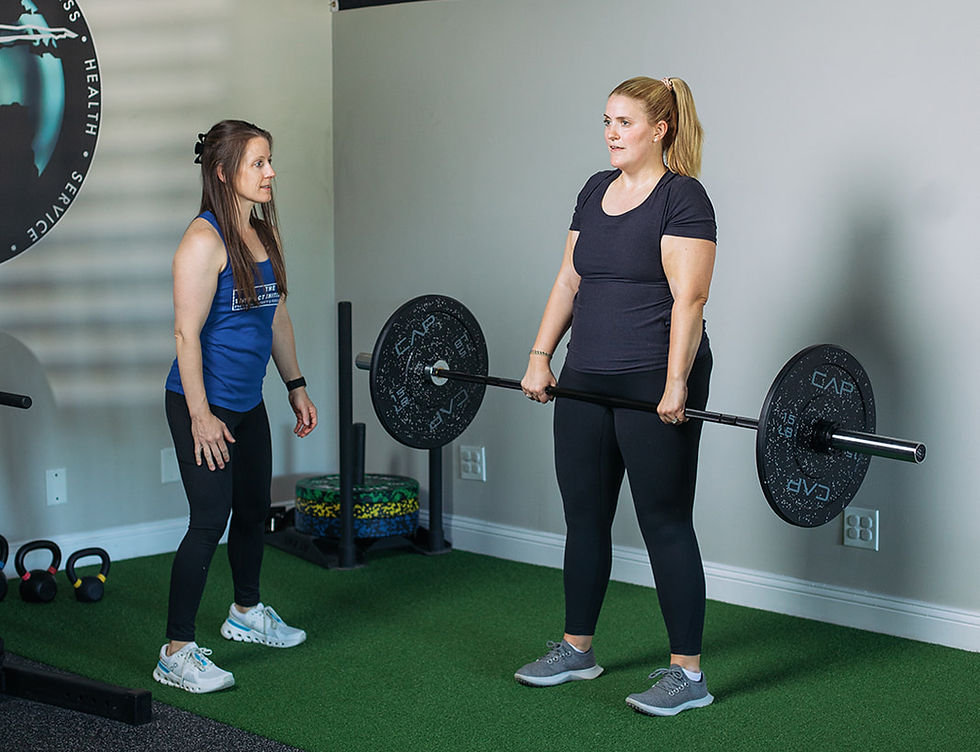
Don't worry though, bone loss isn't something we as women simply have to accept as part of aging. We all have access to one of the most powerful tools for protecting and even improving bone health- strength training!
What Is the Problem With Bone Loss?
Well, for starters… your bones are literally the reason you’re not a human puddle on the floor. They give your body shape, hold you upright, protect your organs, and create the framework that lets every muscle do its job. So, when bone loss starts happening, it’s kind of a big deal.
We’re not just talking about weaker bones, we’re talking about a higher risk of fractures, loss of independence, chronic pain, and a body that can’t keep up with the life you want to live.
Unfortunately, the process is silent. You can't feel your bones getting weaker until an injury or fracture occurs, which is why osteoporosis is often called a "silent disease."

Why Does Bone Health Matter?
Weak bones don't just increase fracture risk, they can completely change your quality of life.
Hip and spine fractures are associated with:
Loss of independence
Reduced mobility
Chronic pain
Increased fall risk
Difficulty exercising and staying active
Lower overall quality of life
Dr. Peter Attia frequently discusses bone density as one of the strongest predictors of healthy aging, emphasizing that preventing fractures is about preserving function and longevity, not simply avoiding broken bones.
Why Walking Isn't Enough
Walking is excellent for cardiovascular health, mental health, and maintaining an active lifestyle. At The Impact Initiative Physical Therapy & Performance, we encourage our patients to walk regularly.
However, walking alone often isn't enough to maintain or improve bone density.
Experts including Dr. Andrew Huberman, Dr. Peter Attia, Dr. Stacy Sims, and Dr. Mary Claire Haver all highlight the same fundamental principle: bones adapt to load.
If your skeleton never experiences meaningful resistance or impact, your body has little reason to invest resources into making it stronger.
Simply put: your bones need a challenge.
Why Strength Training Builds Stronger Bones
Resistance training provides that challenge.
Research consistently demonstrates that properly programmed strength training can maintain or improve bone mineral density, particularly in areas most vulnerable to fractures such as the hips and spine.
Strength training also helps:
Increase bone mineral density
Build and preserve muscle mass
Improve balance and coordination
Reduce fall risk
Enhance confidence and physical function
Maintain independence throughout life
The goal isn't simply lifting weights.
The goal is building a body that can handle life's demands for decades.
How Bone Loss Affects Athletes and Active Adults
Many runners, CrossFit athletes, weekend warriors, and active women assume they're protected because they exercise regularly. Unfortunately, endurance exercise alone doesn't always provide enough loading to stimulate bone growth. Without adequate resistance training, even highly active individuals can experience declining bone density, especially during perimenopause and menopause when hormonal changes accelerate bone loss.
Strong muscles help, but strong bones require intentional loading. Whether your goal is running races, hiking mountains, lifting grandchildren, or staying competitive in your sport, healthy bones provide the foundation.
Heavy Strength Training Is Safe and Effective
Many women still fear that lifting heavy weights will make them bulky or increase injury risk.
The evidence says otherwise.
One landmark study involving women over 65 with low bone density found that participants performing supervised heavy resistance exercises, including deadlifts, squats, and overhead presses, not only became significantly stronger but also improved bone density. This challenges the outdated belief that bone loss is irreversible.
Bones respond to stress at any age when that stress is applied appropriately and progressively.

How Performance Physical Therapy Can Help
Strength training is only effective if it's done safely and progressively.
At The Impact Initiative Physical Therapy & Performance, we help women build individualized programs that match their current abilities while challenging their bodies enough to create meaningful adaptation.
Our performance physical therapists assess:
Movement quality
Strength deficits
Mobility restrictions
Balance and stability
Injury history
Training goals
From there, we develop a plan that helps you move better, lift confidently, and build resilience for the long term.
Whether you're recovering from pain, navigating menopause, returning to exercise, or looking to optimize performance, individualized programming makes all the difference.
The Bottom Line
Strength training remains one of the most effective interventions for improving bone health, preserving muscle mass, reducing injury risk, and maintaining independence throughout life.
If you want to stay active well into your 60s, 70s, and beyond, strength training isn't optional, it's essential.
Ready to Build Stronger Bones for Life?
If you're dealing with bone loss, entering perimenopause or menopause, recovering from injury, or simply want expert guidance, The Impact Initiative Physical Therapy & Performance in Woodstock and Canton, GA is here to help hybrid athletes, runners, and active adults perform better and stay pain-free.
Schedule your evaluation today and start building a stronger, healthier future.
Fitness-Forward. Evidence-Based. Impact-Driven.
Performance Physical Therapy
Woodstock & Canton, GA


Comments